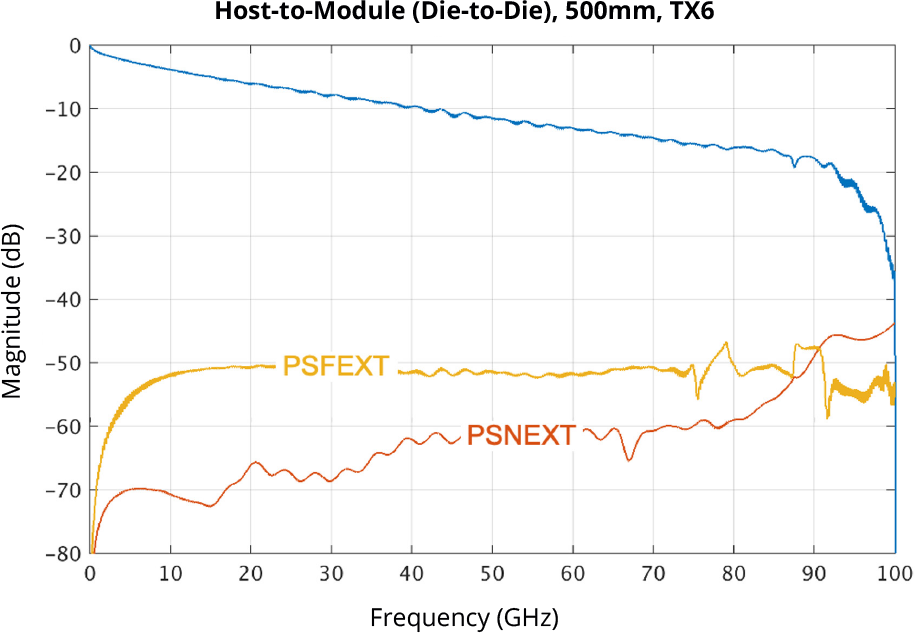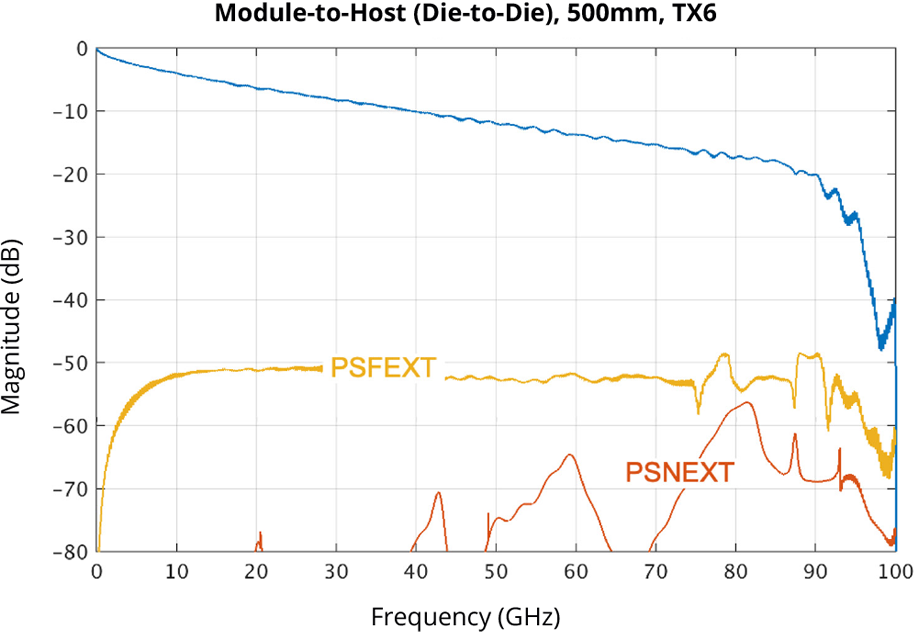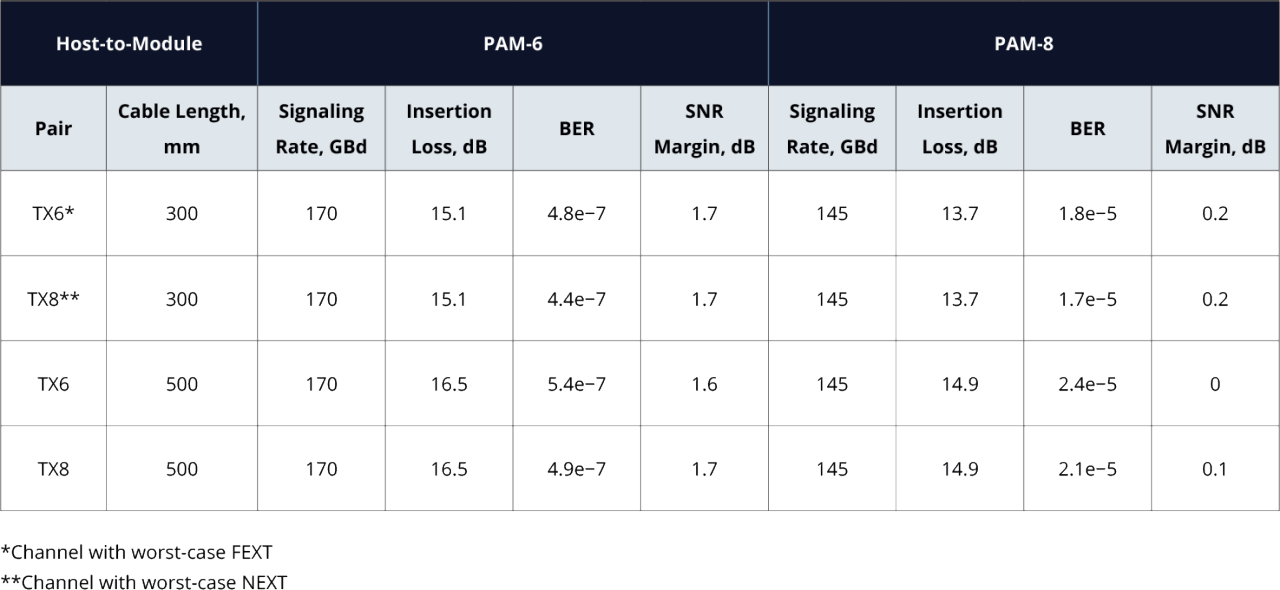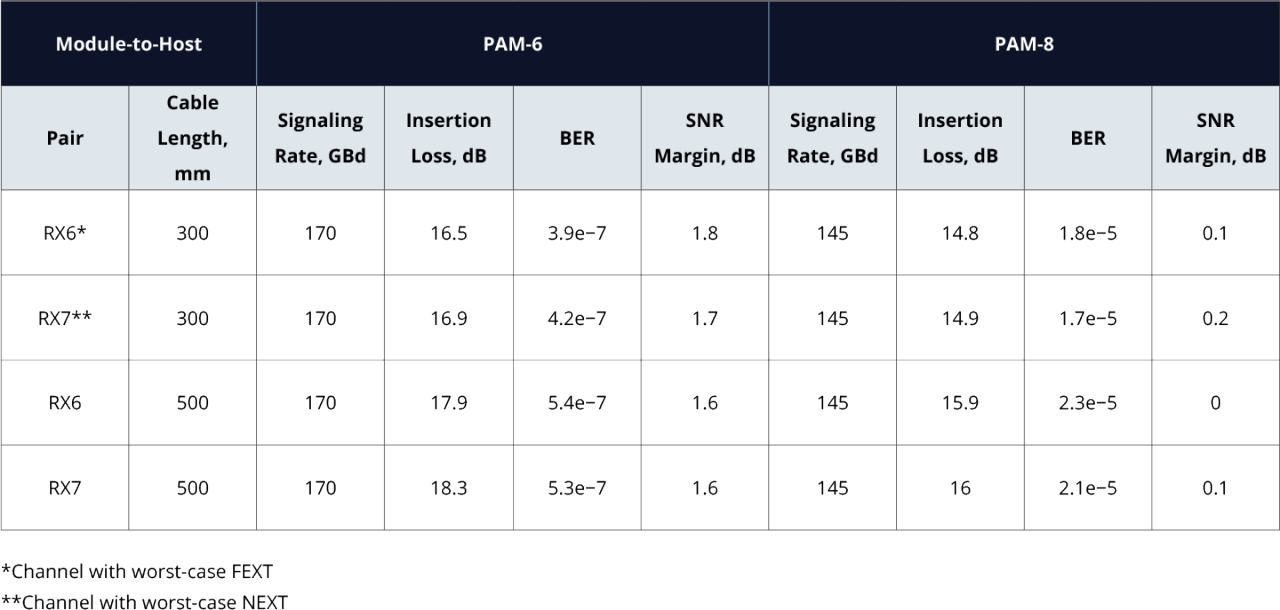

AI is driving rapid investment in data center infrastructure, particularly as hyperscale operators expand the size and performance of AI clusters. The explosive growth in training workloads and inference applications has created new requirements for high-bandwidth interconnects to support thousands of interconnected compute nodes. Meeting these requirements depends on advancing serial link technology to 448G per lane, enabling future 3.2Tbps per port Ethernet interfaces.
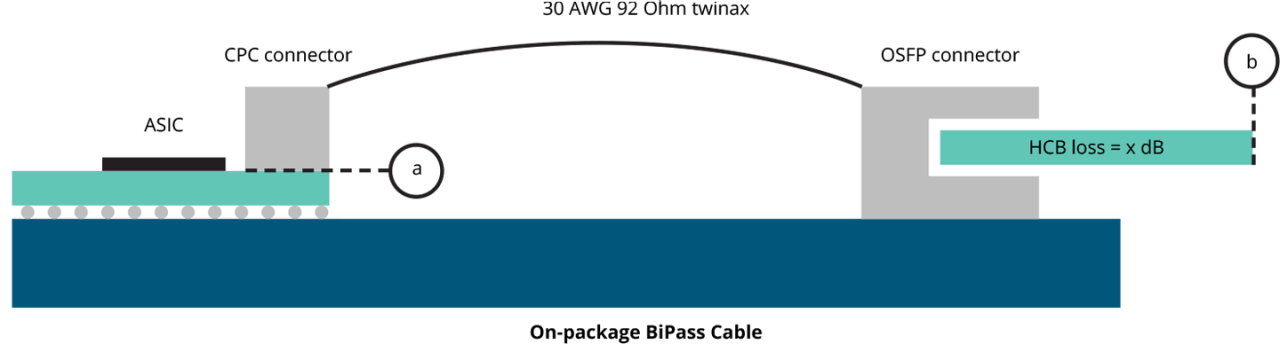
Scaling AI clusters to this level places significant demands on the physical layer, where the interconnect fabric defines the achievable bandwidth density between processors, accelerators and network interfaces. Both optical and copper solutions are being considered, but copper interconnects remain attractive if design challenges in packaging, PCB layout and connector transitions can be overcome. Due to the bandwidth required to support candidate 448G modulation formats, it is still an open question whether traditional PCB interconnects, flyover interconnects and conventional connector form factors can be used at this data rate.
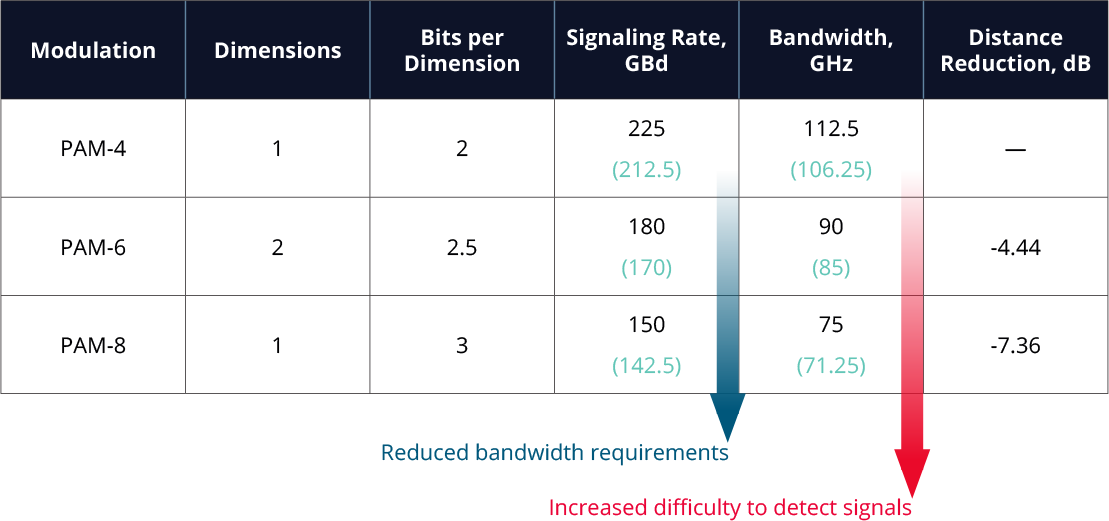
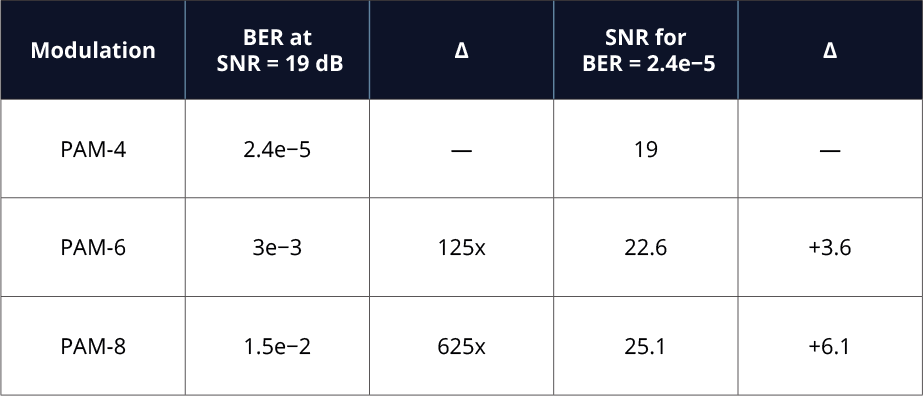
This paper presents a study examining copper interconnect performance at 448G using three proposed modulation schemes: PAM-4, PAM-6 and PAM-8. Each scheme carries different implications for loss-tolerance, linearity and equalization requirements, which in turn affect connector design and system architecture.
The study considers interconnect options between component packages and QSFP modules, providing an overview of signal integrity requirements that must be addressed to enable reliable 448G deployment in AI data centers.